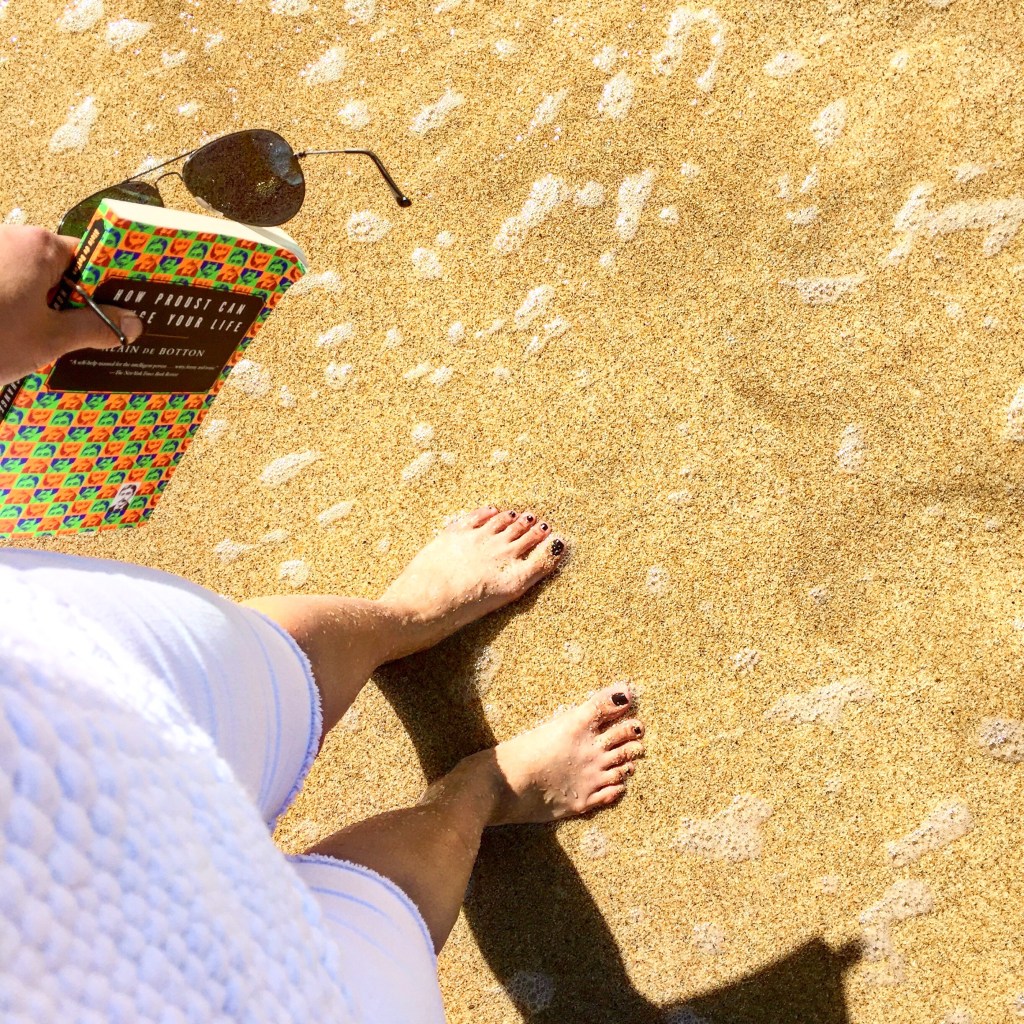
What I know of Marcel Proust: nada. What I know of Alain de Botton: quite a lot, although not personally, but enough for me to dive deep into one of his books, How Proust Can Change Your Life (Shop your local indie bookstore).
One of the things that I’ve truly been enamored with Proust/de Botton’s compendium is a new way of looking: of a character in one of Proust’s essays where he forces a dissatisfied youth to take in Jean-Baptiste Chardin’s paintings of mundane things, not-so-special moments: of bowls of fruit, loaves of bread, kitchen utensils, one reading a book, a mother showing her daughter some mistakes in needlework as opposed to paintings in the Louvre’s “grand palaces painted by Veronese, harbor scenes by Claude, and princely lives by Van Dyck.” That there is beauty in a lot of things that is already around us, and that we are just plainly inattentive to these details. de Botton points out this lack of capacity of seeing beauty is not due to laziness or inattention, but more so because we are inexperienced with looking.
The happiness that may emerge from taking a second look is central to Proust’s therapeutic conception. It reveals the extent to which our dissatisfactions may be the result of failing to look properly at our lives rather than the result of anything inherently deficient about them. Appreciating the beauty of crusty loaves does not preclude our interest in a chateau, but failing to do so must call into question our overall capacity for appreciation.
 Most days I feel like I could be anywhere but where I’m at, in the Presidio Heights of San Francisco where I have been working for the past 9 years. I want to be anywhere but there. Or here, on the kitchen table where I usually have my morning coffee and write away. There’s a plethora of places I dream of — in the countryside of France, Bali, Bergen, Copenhagen, Reykjavik. I realize that it’s not the physicality of these places that lure me (although that helps a lot) but the actual ideas I have of these places that make me want to visit. Not to mention the dominant culture I perceive these places to have that make them so alluring: creative, gentle, unassuming, simple, seemingly devoid of capitalistic tendencies.
Understanding my desires in this sense, of looking at my own life with Proustian eyes, makes me feel like I’ve captured the essence of the book. That the places I want to see, including the things I want to do involve a way of looking at things differently, perhaps more slowly, with more attention to detail and the small moments that make up my existence. True to its word, de Botton delivers a Proustian way of looking at things with other chapters in the book as:
- How to love life today
- How to read for yourself
- How to take your time
- How to suffer successfully
- How to express your emotions
- How to be a good friend
- How to open your eyes
- How to be happy in love
- How to put books down
With the premise of Proust’s novel In Search of Lost Time that I’ve just learned about through this book, de Botton cites Proust’s life and work in a fascinating how-to of life brimming with wit and common-sense attitude when it comes to living. Proust resonates, even as he is bedridden. And just as he is sickly and domestically helpless, his helplessness is all the more endearing knowing that his work will touch and inspire the lives of many in the future.
My copy of Proust’s In Search of Lost Time (the graphic novel edition nonetheless) is on its way, and I am eager to get to know the characters of Swann and Albertine that de Botton referenced multiple times throughout the book which is a “universally applicable story about how to stop wasting time and start to appreciate life.” It is fitting then, to hear these words from Proust, to commit them to memory:
I think that life would suddenly seem wonderful to us if we were threatened to die as you say. Just think of how many projects, travels, love affairs, studies, it — our life — hides from us, made invisible by out laziness which, certain of a future, delays them incessantly.
But let all of this threaten to become impossible for ever, how beautiful it would become again! […] we shouldn’t have needed the cataclysm to love life today. It would have been enough to think that we are humans, and that death may come this evening.


 libromance
Leave a comment