“What you reading?”
This was the question Daniel Gluck, an older man (almost a century old) with the wisest soul would ask Elisabeth, his new, young neighbor every time they took walks. Before you go down that route, it’s not what you think.
Autumn: A Novel (Amazon | Indiebound) by Ali Smith is a novel set in the UK, not a love story but a story about love in many forms.
There’s Elisabeth and her mom, living alongside their neighbor, Mr. Daniel Gluck, and the world around them revolving in varying degrees of discovery and reconciliation.
The story starts with Daniel Gluck in reverie, washed off in an island where he is strong, he can run, and he is able to fashion suits of leaves for himself. He is beyond elated. In real life, he has been sleeping for what seems like forever while Elisabeth reads to him, watches him.
This how the odd friends met: Elisabeth was supposed to write about their neighbor but her mother advised her to make it all up. The write-up was good (“A Portrait in Words Of Our Next Door Neighbour”), so much so that her mother ended up showing it to their neighbor after all. Good ol’ Daniel Gluck was amused.
Their first meeting, a denial on the young one’s part, on account of embarrassment. Said Elisabeth was her sister.
![1[1]](https://libromance.blog/wp-content/uploads/2017/09/111.jpg?w=1024&h=768)
Theirs was no ordinary friendship, no feudal relationship. They talked about arts, books, ways of looking at the world. The ever-present question, always Gluck’s greeting to the young one was: What you reading?
As Elisabeth looked on the frail man — a dear friend while she was growing up and learning to navigate the world — she also bore an exhaustion towards the world
I found this first expressed by her mother earlier on, upon seeing barbed wires to keep “others” out. Tired of the news, tired of the anger, tired of the vitriol that plagued their lives, tired of the violence that cycles through.
![2[1]](https://libromance.blog/wp-content/uploads/2017/09/211.jpg?w=1024&h=768)
Buttressing Gluck and Elisabeth’s friendship was also a personal examination of social and political context. This book is Smith’s first novel post-Brexit, post-refugee crisis. It bears the same themes as Mohsin Hamid’s Exit West, albeit told differently.
I’ve been mostly relegating my reading to American authors and/or publishers, so reading Smith’s Autumn was refreshing. I’m used to reading fiction written in linear fashion, and I mostly focus on the plot and the characters.
With Autumn: A Novel however, every page felt like a puzzle unraveling itself. My favorite scenes are Gluck and Elisabeth’s conversations; they feel comforting, in the same way that reading indoors with rain pouring outside does, marked with an unusual delicacy.
![3[1]](https://libromance.blog/wp-content/uploads/2017/09/311.jpg?w=1024&h=768)
I am so excited that this book was shortlisted for the Man Booker Prize, and I owe it to the institution and the judges for showing readers like me voices I wouldn’t have heard otherwise.
This is one of those books I look forward to rereading. But before I go, more Gluck, speaking the language I love.
![5[1]](https://libromance.blog/wp-content/uploads/2017/09/511.jpg?w=1024&h=768)
* * *
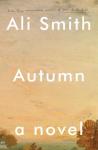 Autumn: A Novel (Amazon | Indiebound) by Ali Smith
Pantheon Books (272 pages)
February 7, 2017
My rating: ★★★★

 libromance
Leave a comment