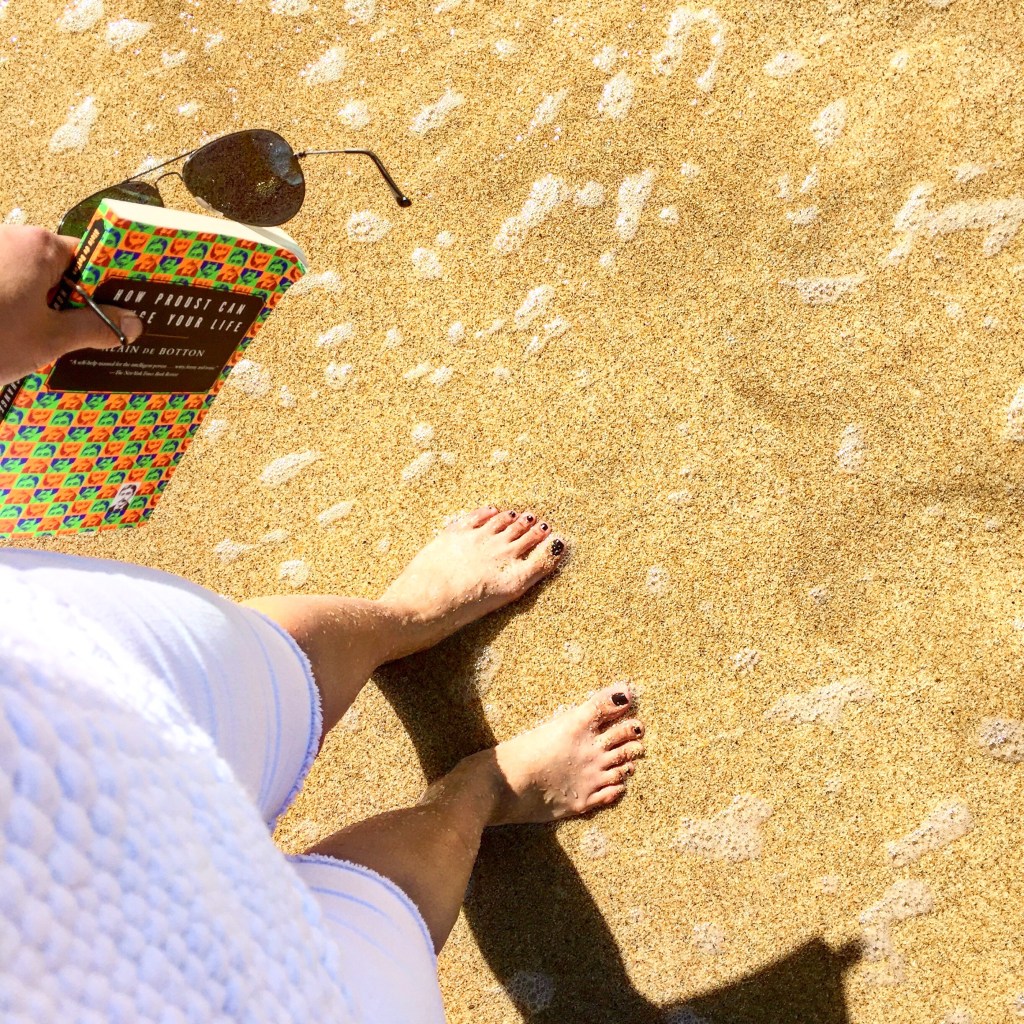
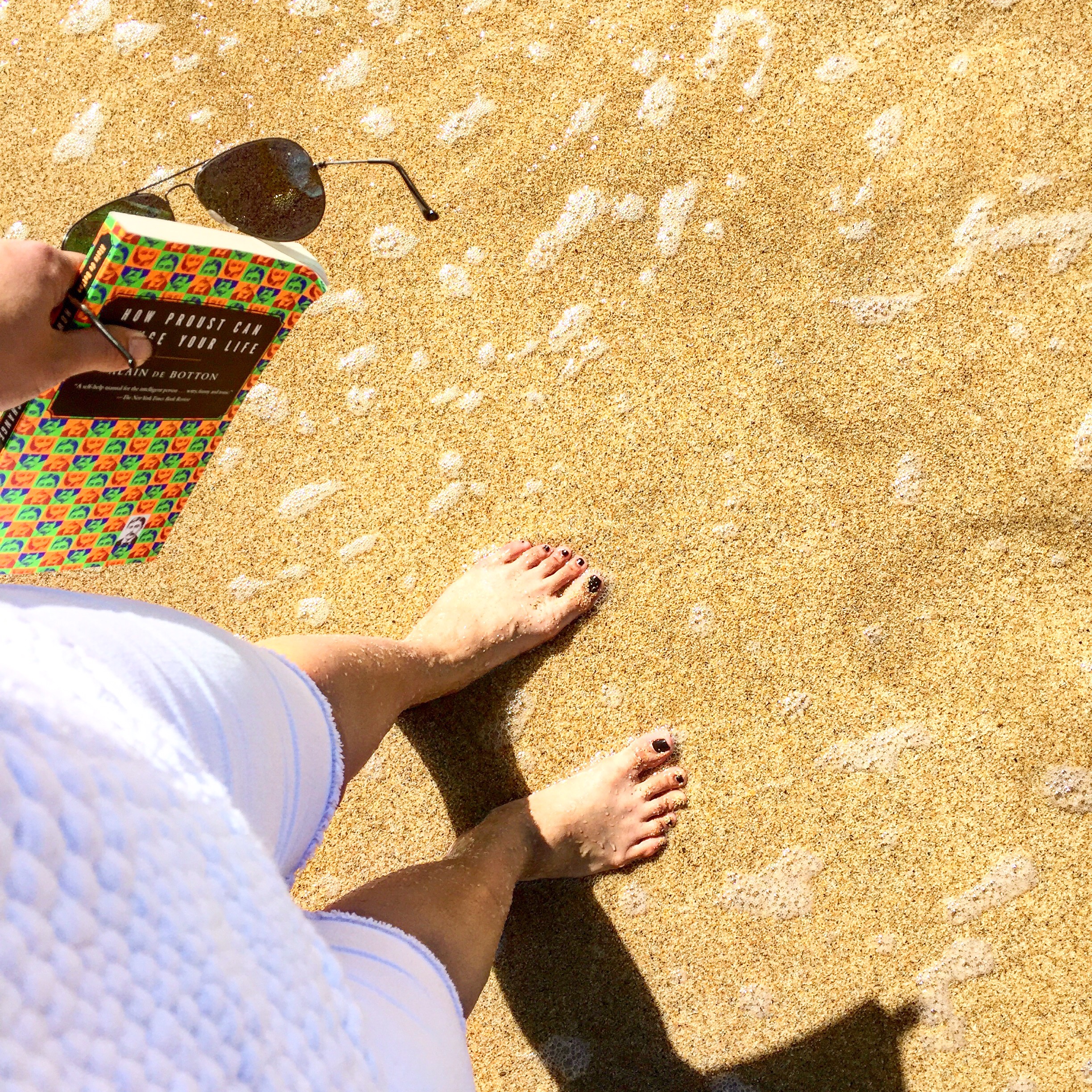
What I know of Marcel Proust: nada. What I know of Alain de Botton: quite a lot, although not personally, but enough for me to dive deep into one of his books, How Proust Can Change Your Life (Shop your local indie bookstore).

One of the things that I’ve truly been enamored with Proust/de Botton’s compendium is a new way of looking: of a character in one of Proust’s essays where he forces a dissatisfied youth to take in Jean-Baptiste Chardin’s paintings of mundane things, not-so-special moments: of bowls of fruit, loaves of bread, kitchen utensils, one reading a book, a mother showing her daughter some mistakes in needlework as opposed to paintings in the Louvre’s “grand palaces painted by Veronese, harbor scenes by Claude, and princely lives by Van Dyck.” That there is beauty in a lot of things that is already around us, and that we are just plainly inattentive to these details. de Botton points out this lack of capacity of seeing beauty is not due to laziness or inattention, but more so because we are inexperienced with looking. 

The happiness that may emerge from taking a second look is central to Proust’s therapeutic conception. It reveals the extent to which our dissatisfactions may be the result of failing to look properly at our lives rather than the result of anything inherently deficient about them. Appreciating the beauty of crusty loaves does not preclude our interest in a chateau, but failing to do so must call into question our overall capacity for appreciation.
 Most days I feel like I could be anywhere but where I’m at, in the Presidio Heights of San Francisco where I have been working for the past 9 years. I want to be anywhere but there. Or here, on the kitchen table where I usually have my morning coffee and write away. There’s a plethora of places I dream of — in the countryside of France, Bali, Bergen, Copenhagen, Reykjavik. I realize that it’s not the physicality of these places that lure me (although that helps a lot) but the actual ideas I have of these places that make me want to visit. Not to mention the dominant culture I perceive these places to have that make them so alluring: creative, gentle, unassuming, simple, seemingly devoid of capitalistic tendencies.

Understanding my desires in this sense, of looking at my own life with Proustian eyes, makes me feel like I’ve captured the essence of the book. That the places I want to see, including the things I want to do involve a way of looking at things differently, perhaps more slowly, with more attention to detail and the small moments that make up my existence. True to its word, de Botton delivers a Proustian way of looking at things with other chapters in the book as:

  • How to love life today
  • How to read for yourself
  • How to take your time
  • How to suffer successfully
  • How to express your emotions
  • How to be a good friend
  • How to open your eyes
  • How to be happy in love
  • How to put books down

With the premise of Proust’s novel In Search of Lost Time that I’ve just learned about through this book, de Botton cites Proust’s life and work in a fascinating how-to of life brimming with wit and common-sense attitude when it comes to living. Proust resonates, even as he is bedridden. And just as he is sickly and domestically helpless, his helplessness is all the more endearing knowing that his work will touch and inspire the lives of many in the future.

My copy of Proust’s In Search of Lost Time (the graphic novel edition nonetheless) is on its way, and I am eager to get to know the characters of Swann and Albertine that de Botton referenced multiple times throughout the book which is a “universally applicable story about how to stop wasting time and start to appreciate life.” It is fitting then, to hear these words from Proust, to commit them to memory:

I think that life would suddenly seem wonderful to us if we were threatened to die as you say. Just think of how many projects, travels, love affairs, studies, it — our life — hides from us, made invisible by out laziness which, certain of a future, delays them incessantly.

But let all of this threaten to become impossible for ever, how beautiful it would become again! […] we shouldn’t have needed the cataclysm to love life today. It would have been enough to think that we are humans, and that death may come this evening.

22 responses to “A Different Way of Looking, with Marcel Proust and Alain de Botton”

  1. leslielee Avatar

    I love this post. Favorite so far on here 🙂 Would love to know what you think about my blog, I want to bring out a similar feeling in people as this.

    Like

    1. Pia Cortez Avatar

      Thank you so much for reading, and I’ll definitely look into your blog. I’m also curious to know what kinds of feelings you had upon reading this post, let me know when you get a chance 🙂

      Liked by 1 person

      1. leslielee Avatar

        I have spent a great deal of time thinking about this very idea. It’s basically the same awareness you get in Buddhism, but I would say Buddhism takes it a step further to the metaphysical realm. If anything, it’s more difficult to sustain the “worldy” awareness that allows you to appreciate your life and see all the things in it for what they are, because it’s within societal reality that we tend to become lazy as you put it, caught up in the automation that allows us to function without exhausting ourselves. So there is this inherent oppositional force. Our minds are so powerful but also so complicated. We could choose at any moment to just be happy, but our desires take over and we become ever critical and lacking. I think first and foremost, it is exhausting to “see” over long periods of time. I have bouts of very intense levels of awareness, but afterwards I just want to zone out to rest. I suppose it’s a strength, and like any other it must be trained to increase levels of endurance. That’s the whole point of Buddhism as a practice. Many practitioners forget that all of the rituals aren’t meaningful in and of themselves; they are simply tools to help you build habits and transform your brain to permanently minimize levels of automation and lack of awareness.

        Liked by 1 person

      2. Pia Cortez Avatar

        Again, thank you so much for your response and for such a meaningful insight. I was just reflecting on awareness last night, specifically how our minds work. I came across a post earlier yesterday that read: “The soul usually knows what to do to heal itself. The challenge is to silence the mind.” I resonated with this so much because I’m used to intellectualizing things firsthand, as opposed to just letting things be but still being aware. It is definitely a strength, and something that I think can be developed over time (with a lot of patience I should add). To awareness!

        Liked by 1 person

      3. leslielee Avatar

        I know exactly what you’re talking about. It’s funny how that works. I just watched an interview that mentioned this phenomena a lot and discussed how to overcome it. If you’re interested, I would say be patient and watch the whole thing; don’t get off put by some of the imprecise spiritual language they use (I’m a scientist). https://evolutionarymystic.wordpress.com/2016/03/06/georgi-y-johnson-and-bart-ten-berge-anxiety-and-awakening-moderated-by-renate-and-iain-mcnay/

        Like

  2. kjoneja Avatar

    I guess we all need to pause and breathe and take a look around. We’re caught up staring at our laptop screens or smartphones and are always stressed out. I’ve read ‘The Architecture of Happiness’ by Alain de Botton and follow his Youtube channel School of Life, could you recommend which book of his I should pick up next? 🙂
    My post on Philosophy of Technology might interest you. I would love your response. https://kanchanjoneja.wordpress.com/2016/02/28/philosophy-of-technology/

    Like

    1. Pia Cortez Avatar

      Hi, thank you so much for your response! I am so glad that you resonated with my post, and it is true that we’re so used to our gadgets and I’ve been really mindful about screen time ever since I noticed how it has become compulsive. Your comment made me pick up “The Architecture of Happiness” and I’m now halfway through the book. Wow. I have never given architecture any thought when it comes to influencing our emotions but this book has really blown me away. Thanks for the recommendation 🙂 As for a book by de Botton, I would recommend “Essays in Love” and “Status Anxiety” which are really great reads. He also has a novel coming out in June which I’m truly excited to read!

      I’ll definitely check out your post, thank you for sharing. Happy reading and writing!

      Liked by 1 person

      1. kjoneja Avatar

        I’m so glad to know you like the book! 🙂 (I read it when I’d just started architecture school.) And thanks for the recommendations I’ll surely check them out soon! 🙂 Keep Calm and Write On!

        Liked by 1 person

      2. Pia Cortez Avatar

        I just finished the book and I am so smitten! Planning to write the next post on my blog about it, let me know if you have any ideas 🙂

        Liked by 1 person

      3. kjoneja Avatar

        That’s amazing! 😀 Sure will do 🙂

        Like

  3. brontespageturners Avatar

    Great to read your thoughts. I read his The Consolations of Philosophy a while back which has a similar approach. I would thoroughly recommend that and will check this one out!

    Liked by 1 person

    1. Pia Cortez Avatar

      Thanks so much for your comment! I’m definitely going to check that out, Alain de Botton has made me appreciate philosophy so much. When you have the time, Status Anxiety is also a good read.

      Liked by 1 person

      1. brontespageturners Avatar

        Thanks for the recommendation!

        Like

  4. How to Have a Traveling Mindset, with Alain de Botton – libromance Avatar

    […] it would make would-be travelers and wanderers like myself to look at old places with new eyes, something that Joseph Campbell also reminded me of. Instead of carrying the knowledge that nothing is new and everything is familiar, it would be […]

    Like

  5. L’intimité de la vie quotidienne, with Adam Gopnik and Pierre Bonnard – libromance Avatar

    […] I visited the Pierre Bonnard: Painting Arcadia exhibit over the weekend, at the Legion of Honor in San Francisco. I have never heard of Bonnard nor seen any of his works before, but as of late anything French has been a keen interest. The second part of the exhibit, curated by Esther Bell features the artist’s intimisme, painted works which detail domestic interiors with an intimate subject matter. He depicted scenes at the breakfast table, women reading the newspaper awashed in morning light, tables laden with food. What Bonnard does is capture these moments tenderly, reminiscent of the way the writer Marcel Proust proposed a different way of looking in Alain de Botton’s How …. […]

    Like

  6. […] wrote about how reading the book can give birth to a different way of looking at the things around us, however grand or mundane. Proust was a sickly man, who was domestically helpless, who wrote with […]

    Like

  7. […] been reading de Botton for a while, in awe of his work on architecture, travel, philosophy and how Marcel Proust can change our lives. Reading fiction by de Botton was a first, and it proved to be delightful as it is revelatory as […]

    Like

  8. […] about the writer from Alain de Botton’s book How Proust Can Change Your Life, which was a compendium of ways of looking and living life, in true Proustian […]

    Like

  9. […] as Magic, with Stephen King An Unlikely Currency: Books A Different Way of Looking, with Marcel Proust and Alain de Botton Sunday Spotlight: Filipino Literature #IAmAnImmigrant: My Story in 5 […]

    Like

  10. […] I’m not Marcel Proust, as much as I love him, because I did not grow up rich therefore I have to worry about feeding and supporting myself. […]

    Like

  11. […] A Different Way of Looking with Marcel Proust and Alain de Botton This is a compendium of how I was inspired and influenced by the French author, through the eyes of British philosopher Alain de Botton. […]

    Like

  12. […] spite of this, I come back to a Alain de Botton on his book about Proust. In one of the chapters, they talk about books and reading. And as much as I love both, for as long […]

    Like

Leave a comment

This site uses Akismet to reduce spam. Learn how your comment data is processed.