
“I pledged to ISIS in January 2015 and left in March,” said Raad Abdullah Ahmad, 31. “My family disowned me after that. Imagine having no family. I left because I didn’t like what they did to people.”
—ISIS Fighters, Having Pledged to Fight or Die, Surrender En Masse (NYT)
When I read the lines above in a NYT article, my thoughts immediately went to Parvaiz Pasha, a fictional character in Kamila Shamsie’s book Home Fire: A Novel (Amazon | Indiebound) which was long-listed for the Man Book Prize for fiction.
Since I migrated to the U.S. in 2004, the political reality of the country has always stayed the same: at open war. Afghanistan, Iraq, Pakistan, Syria. Taliban, Al Qaeda, ISIS. That has translated to war against Muslims, officially ordained as “terrorists” by the West.
My coming-of-age story is marked by this reality, a young Filipino immigrant slowly understanding the social pathology of violence, of the industrial military complex, of the other-ing of militants who essentially wanted the same thing the U.S. did.
In Home Fire, I was able to get a glimpse of the story behind Parvaiz’s decision, a British Pakistani who was recruited to a militant group on accounts of being the son of a famed jihadi warrior. Shamsie takes her readers beneath the layer of what we see on our TV screens, or what politicians have chosen as their generic anti-terrorism mouth pieces.
Parvaiz’s dad brought shame to their family, after joining a militant group himself. His involvement was immediately frowned upon, he was disowned. As a child, the boy took great pains to conceal his father’s identity, and it was only when he met another elder, a father figure who intentionally tried to recruit Parvaiz did he realize what his father’s work meant to other people.
![1[1]](https://libromance.blog/wp-content/uploads/2017/10/111.jpg?w=1024&h=768)
These responsibilities were what estranged the father from Parvaiz’s twin sister Aneeka and older sister Isma. The legacy of their father loomed in the household, a cause of great shame to both women. The story centers on these three characters, as Shamsie skillfully adopts and mimics their struggle as a Greek tragedy. She hones in on their relationship, illustrating the ebb and flow of simultaneous allegiance and estrangement.
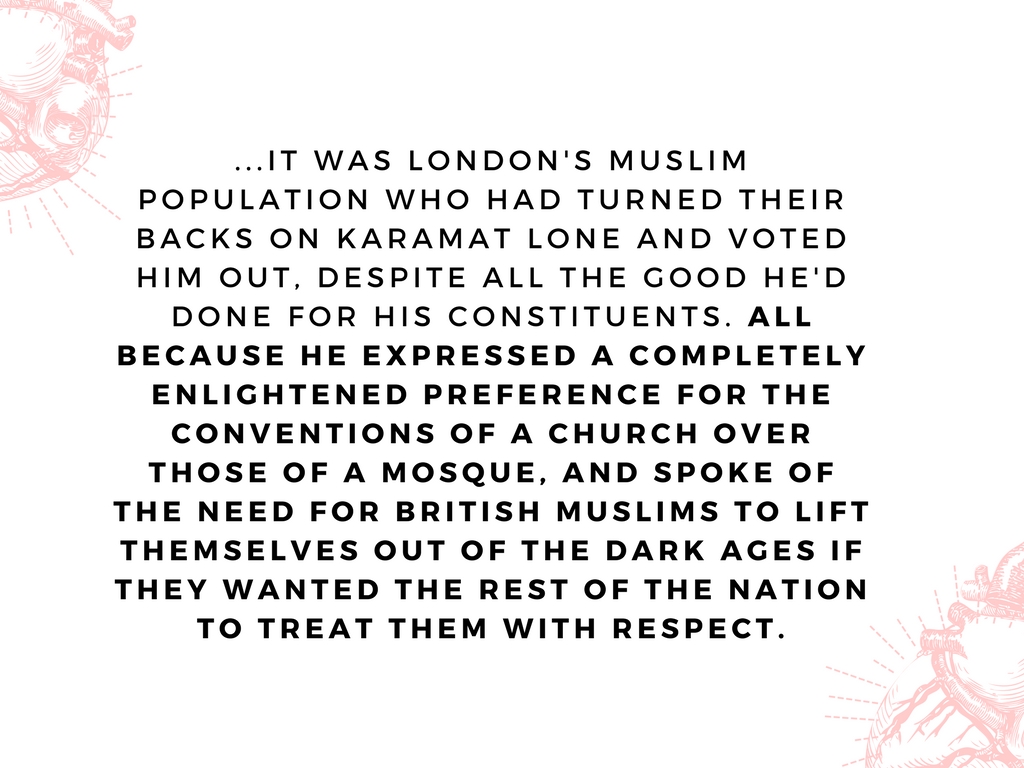
The father-son dynamic takes another form with two more characters, a British Muslim politician and his son who gets tangled up with the twin sister. Karamat Lone once shared a photo with the twin’s father, as if mocking the political distance between them. Whereas one harbored a nationalist fervor that ultimately ended his life, the other believed in adopting “enlightened” Western ways.
Home Fire tells the social, political and moral story of our time, a conflict that has long been drawn between the East and the West. While I wish I can review a book as objectively as I should, I can’t take off my own lens and perspective and where I stand in the face of creating history. There are complications and contradictions.
While I can read the Shamsie’s book and put it away on my shelf when I’m done, the fact is I am living and breathing in a country whose ideals have trampled on the rights, lives and dreams of others.
I am no political scientist, no expert on this field. But to some extent, I know that the word terrorism is subjective and is dependent on who is looking. What I am though, is a student of history, a fervent lover of the written word, perpetually curious about/alarmed by the world.
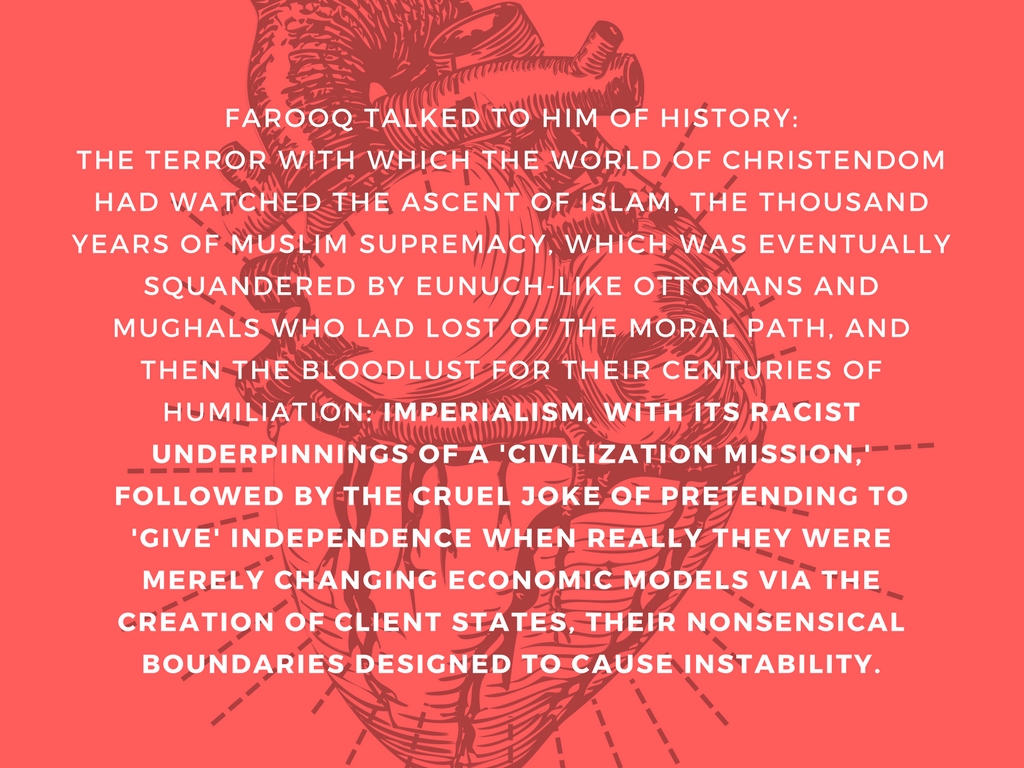
From one generation to the next, the blood lust as the quote above inscribes has long been a drive for power, control and legacy, even shame, no matter what it takes.
* * *
 Home Fire: A Novel (Amazon | Indiebound) by Kamila Shamsie
Riverhead Books (286 pages)
August 15, 2017
My rating: ★★★★


Leave a Reply